Should You Compete in BJJ? A Practical Beginner’s Guide
Most people who start Brazilian Jiu-Jitsu eventually ask the same question: “Should I compete?”
Even though competing is optional, it can feel intimidating and overwhelming!
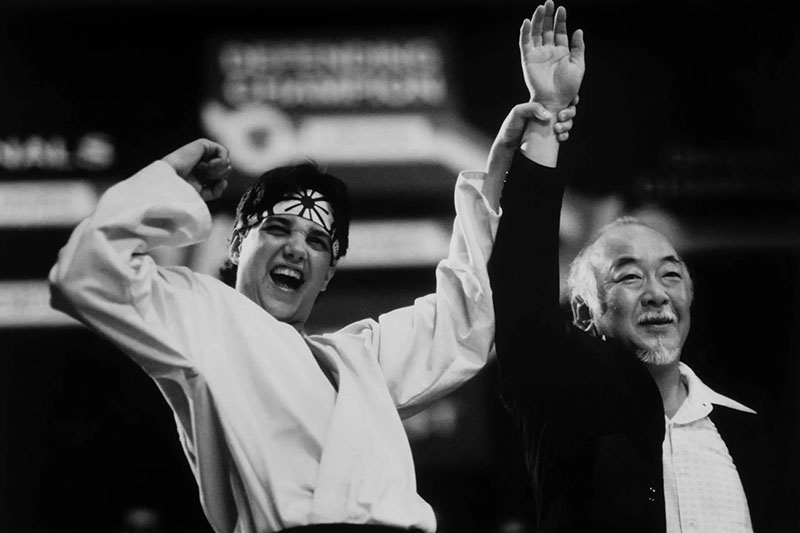
Like an 80’s martial arts movie where EVERYTHING is on the line. Where you need the perfect hype song, a stellar training montage, and a mind-blowing comeback performance to prove that you’re a success, once and for all!
People worry about losing. They worry about embarrassing themselves or making their coaches look bad. They worry they won't be able to perform with their current skill set or athletic ability.
But these fears are completely normal! Everyone has them, especially the first time they compete!
In this post, I’m going to show you why competing in Jiu-Jitsu is worth the effort. It accelerates your progress and helps prepare you for high-stress situations, especially in self-defense.
Of course, we all want to win! Your teammates want you to do well and your coaches want to help you succeed. But win or lose, the real value of competing has nothing to do with the outcome. What matters is the experience, the lessons you learn, and how they help you grow in your Jiu-Jitsu journey.
TL;DR: Competition outcomes don’t matter as much as people think—especially at white belt. The real value is the experience itself. So go compete! It’s fun!
Addressing Psychological Barriers
First, let’s look at some of the common psychological barriers people face when they think about competing.
The Goal Is to Compete, Not to Win
I remember hearing one of my coaches say, "I just love competing".
I took that to mean that he enjoys the act of testing his skills. He didn’t say, “I just love winning.” Of course he loves winning, everyone does!
But this is an important distinction: Winning is the objective, but it’s not the purpose.
The purpose is the act of competing itself: testing your abilities, learning, and improving.
If you compete enough, eventually two things will happen:
- You'll win some matches
- You'll lose some matches
No matter how good you are, one day you will face someone who is better than you. And no matter how bad you think your Jiu-Jitsu is, you will eventually win some matches.
Both experiences teach valuable lessons, but the important thing is that you show up and continue to test yourself.
Don’t Overthink It!
When a tournament is coming up, people often think:
- “I’m not ready”
- “I haven’t trained enough”
- “I need to be at my absolute best”
Your first tournament especially is all about experience, it's not a final exam! It’s an opportunity to see what a tournament environment feels like, to support your teammates, to learn, and have fun!
I recently spoke with a parent whose daughter was considering competing for the first time. She was excited, but the Dad was worried that she wasn't prepared for such a big event.
I told him, "Don't think about this as a big scary Martial Arts tournament that she needs to win. Think of it as a fun Jiu-Jitsu event she gets to be part of."
That student ended up competing, and she did awesome! She followed her game plan, listened to her coaches, won some matches, and most importantly, she had fun the whole time!

What’s Really Different About Competition?
In training, you roll with people you know. You don't usually get too nervous sparring in class, right?
Well, competition isn't really that much different. The only things that change are the environment and the stakes.
Think about it, what's the real difference between a tournament match and a casual sparring session?
- The mat color may be different
- People are watching you
- Your opponent doesn’t know you, you don't know them, and you're both trying to win
- The referee keeps score, enforces the rules, and raises someone's hand at the end of the match
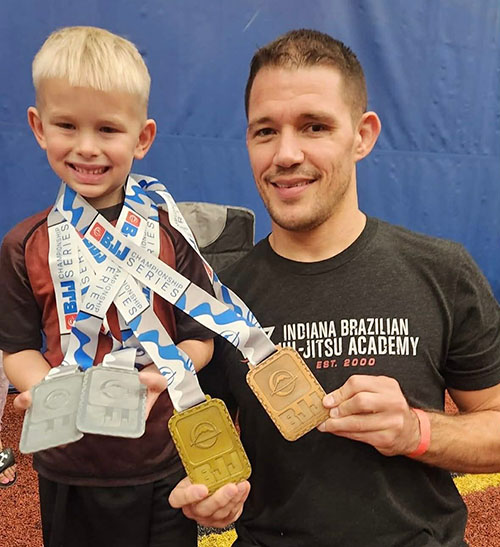
- People earn medals if they win enough matches
Other than that, it's the same activity! I tell this to my competing students all the time, borrowing perspective from former UFC fighter Chael Sonnen.
Below is a clip from The Ultimate Fighter (Season 17) where Chael explains this idea to his team. The whole video is worth watching, but if you’re nervous about competing, start around the 2:29 mark:
Chael tells the team:
"The only thing that changes is the environment. I'll give you guys an example, this very famous study done. This gentleman brings in a long 2x4. He sets the 2x4 down and has a group like this, and he asks random people to walk the 2x4 heel-to-toe. So they lay the 2x4 on the mat. Everybody gets up, and they walk it like it's no big thing, right? Big deal. He brings in two big step ladders. He hangs the 2x4 across the ladders, and he asks them 'who's ready to walk it?'. And nobody raises their hand. The environment changed, but the act doesn't. And on game day, the environment changes, why? Because they put a referee in there? Make you take your T-Shirt off? They bring in Uncle Dana [White]? It's the same thing. It's the same 2x4, it's the same ring."
In this case, the team is preparing for MMA fights and competing for a UFC contract—so the stakes are MUCH higher than a BJJ tournament.
But the principle is the same. It's the same act, just different environment. Once you understand that, it becomes a lot easier to get out there and compete!
Your Coaches Aren’t Judging You
A common fear is disappointing your coaches. You don't want to perform badly and feel like you've let them down.
But that's just silly! What coaches really want is simple and attainable.
They want to see you:
- Train hard
- Give your best effort
- Be respectful to event staff and other academies
- Refuse to quit when things get difficult
If you do those things, your coach will be proud of you, regardless of the outcome.
Even if you lose quickly, stepping onto the competition mat takes courage. That alone earns the respect of your coaches and teammates.
So Why Compete?
Here are many great reasons, and they actually have nothing to do with winning medals!
1 — Competition Accelerates Jiu-Jitsu Progress
Coach James often says that competing in one match is the equivalent of training 5 BJJ classes in terms of growth.
Competition puts a spotlight on your Jiu-Jitsu, revealing your strengths and weaknesses. It's a reliable way to find out what really works for you and where you need to improve.
This is why I strongly recommend recording your matches whenever possible and reviewing them afterward.
Most of us (including experienced competitors) don’t remember our matches clearly. We're so focused on imposing our game that we often miss what is actually happening.
When you watch the footage later, you'll notice things you didn’t see in the moment:
- Small mistakes in positioning
- Missed opportunities
- Strategic decisions that didn’t work, or mistakes in judgement
- Or moments where you actually performed better than you thought
That kind of feedback is incredibly valuable for improving your Jiu-Jitsu! And because the stakes were elevated, the lessons you learn are more likely to stick.
But most importantly, this will give you a clear direction on what you should work on next.
2 — Competition Helps Prepare You for Real Pressure
Some students say they only train Jiu-Jitsu for self-defense and have no interest in competing. That’s completely valid!
But as coaches, we still recommend competing at least once per belt level—because we know it dramatically improves your ability to use your Jiu-Jitsu in a real self-defense situation.
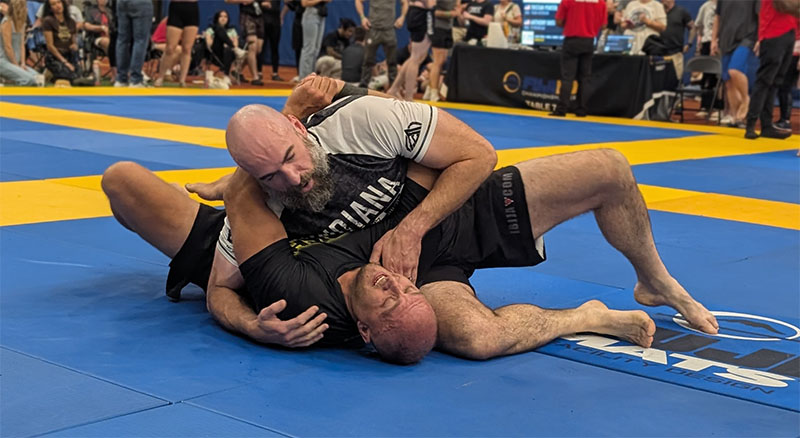
When we train in class, we’re surrounded by teammates and friends. Even during hard sparring, the environment is familiar, controlled, and relatively low-stress.
But as we discussed earlier, competition raises the stakes.
We get nervous. Our breathing changes. Adrenaline spikes. We tense up and gas out much faster than we expect.
Now imagine a self-defense situation. The stakes are real, and your attacker actually wants to hurt you! Your adrenaline goes through the roof, your heart rate skyrockets. Fine motor skills become much more difficult, if not impossible.
You do NOT want to experience that level of stress for the first time during an actual altercation!
Competition gives you a chance to experience that kind of pressure in a controlled environment. You get to practice executing your Jiu-Jitsu when the stakes feel high.
3 — Competition Motivates Healthy Habits
Another great benefit of competing is how it influences your habits outside the gym!
When a tournament is coming up, people naturally want to take better care of themselves. If they haven't already, they start to:
- Prioritize sleep and recovery
- Eat healthier
- Hydrate properly
- Exercise, stretch, and train more consistently
These habits are beneficial whether you’re competing or not!
Lastly: Tournaments Are Actually Fun!
Every single person at a Jiu-Jitsu tournament WANTS to be there! They want to test themselves, support their teammates, and be part of the community. Even if a match doesn't go your way, you will still have fun, I promise!
But the team camaraderie is really the BEST part of competing! You cheer for your teammates. They cheer for you. You celebrate wins together and support each other after losses. And because Jiu-Jitsu is such a tight-knit community, you will even make friends with competitors from other schools!
Win or lose, everyone has a great time!
Practical Tips for Your First Tournament
Competing for the first time soon? Here are a few practical tips!
Preparation:
1 — Have a Game Plan
Take an honest inventory of your Jiu-Jitsu game. Ask yourself:
- What are my strengths and weaknesses?
- What positions am I best at?
- How can I get there quickly?
- What submissions do I rely on most?
- What will I do if my first attack fails?
- Where do I feel the least comfortable?
- What's my plan for escaping or avoiding bad positions?
Just asking these questions helps you analyze your Jiu-Jitsu more critically and gives your training more direction.
Coach James is a HUGE advocate of training and competing with a game plan. He explains how to build one in this video below, and you can download a Jiu-Jitsu game plan sheet here.
2 — Drill, Drill, DRILL!!!
Drilling is one of the most underrated parts of Jiu-Jitsu training.
As Coach Joel often says:
“Sparring makes you tougher, but drilling makes you better.”
Leading up to a tournament, spend extra time drilling your entire gameplan. Especially your takedowns, escapes, and your strongest techniques.
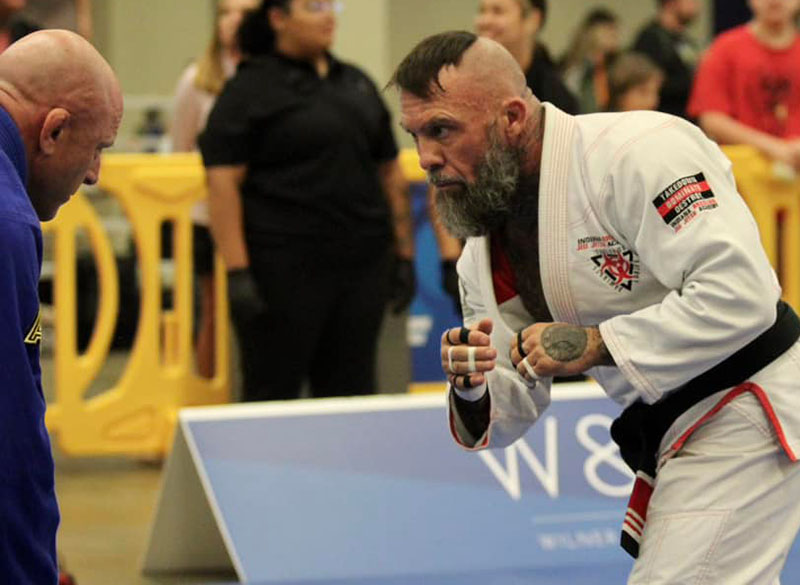
3 — Don’t Worry About Cutting Weight
For your first few tournaments, compete at your natural body weight. Avoid the temptation to cut weight just to move into a lighter division.
Extreme weight cutting makes people feel dehydrated, weak, and fatigued. That will hurt your performance much more than a heavier opponent.
You want to start the match feeling strong, energized, and ready to throw down!
4 — Take It Easy the Week of the Tournament
The week of the tournament is NOT the time to push yourself.
Instead of hard sparring, you should focus on:
- Drilling
- Reviewing your game plan
- Light exercise
- Recovery
Pushing too hard right before a tournament dramatically increases your risk of injury. Don't make this mistake!
Tournament Day
Now here are some tips for the day of the tournament:
1 — Bring the Right Gear
Be prepared! Bring anything you might need:
- Your gi (and a backup gi)
- No-gi gear if required
- Mouth guard
- Water
- Healthy snacks - Fruit is great for quick energy during a tournament. Avoid heavy meals with lots of fat, dairy, or protein shortly before competing. NO FAST FOOD!
The last thing you want is to be distracted or stressed because you forgot something. Show up prepared so you can focus on your matches.
2 — Warm Up Properly
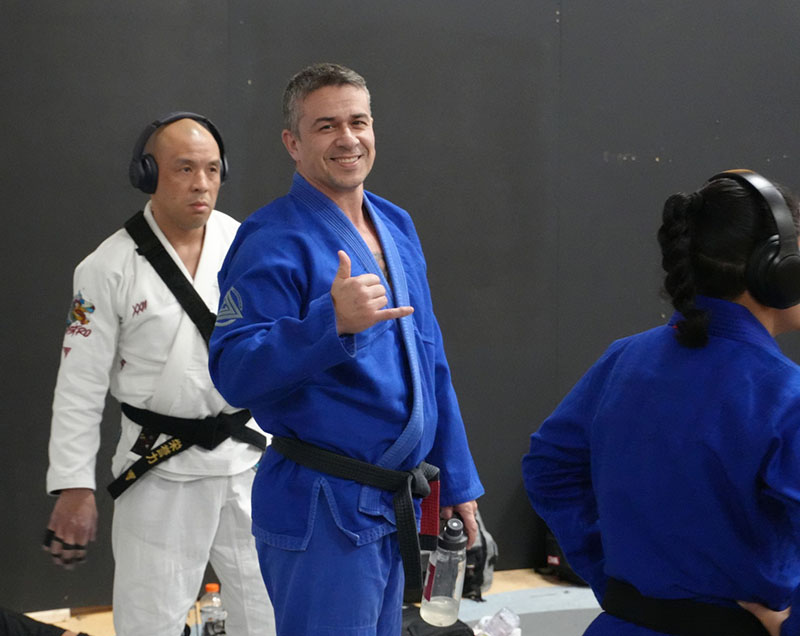
Make sure you break a sweat before your match!
I like to get a solid warm-up about an hour before my first match. I’ll run through techniques, grip fight with a teammate, squats, lunges, pushups, bear crawls, shrimps, or sprints—anything to get a good sweat going. Then, about 10–15 minutes before my match, I’ll elevate my heart rate again with light movements like bouncing, jogging, or squats.
If your first burst of physical effort happens during the match itself, you will get tired quickly and increase risk of injury.
A proper warm-up prepares your body for the intensity of competition and helps you perform at your best!
3 — Stay Calm and Efficient
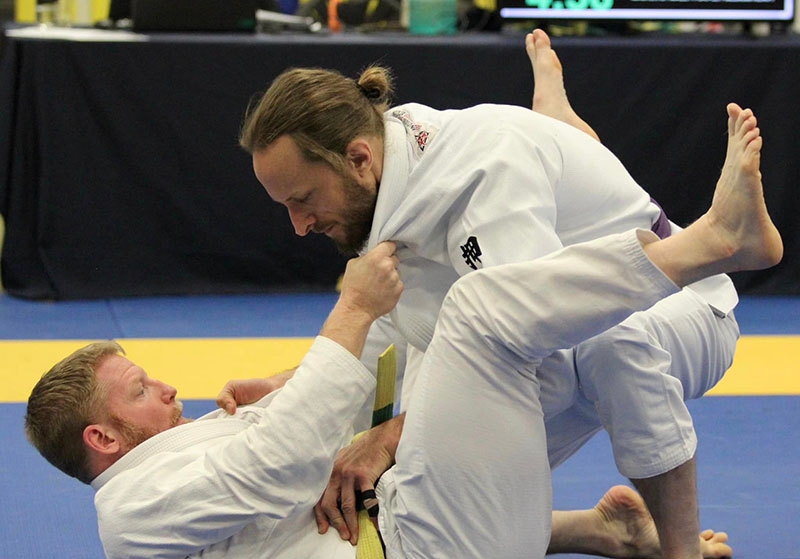
Jiu-Jitsu is all about efficiency, the ability to accomplish tasks with minimum wasted effort or resources.
Jiu-Jitsu gets a LOT harder when you're tired, so don't burn all your energy in the first minute! Try to stay calm, breathe, and execute your techniques deliberately. If you control your energy more efficiently than your opponent, you will have a massive advantage.
4 — Listen to Your Coaches!
This one cannot be overstated!
During your match, your coaches will be giving instructions from the sidelines. They will tell you:
- The score
- How much time is left
- Any adjustments you should make
If they’re yelling, it’s not because they’re upset. They’re trying to be heard over the noise or to give you urgency when you need it.
Your coaches give you guidance based on years/decades of direct experience. Do your best to listen and follow their instructions!
Final Thoughts
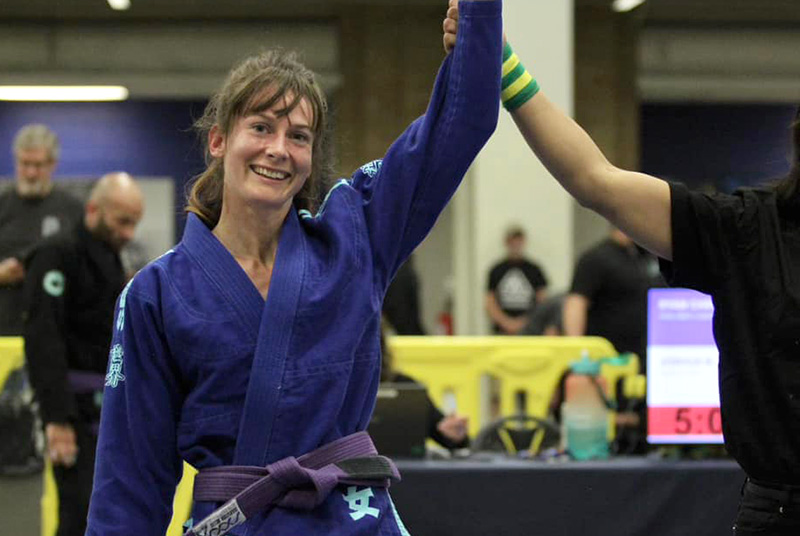
Competing in Jiu-Jitsu can feel scary at first. But once you understand what tournaments actually are—a chance to test yourself, learn, and grow—they become much less intimidating. It's just another opportunity to improve your Jiu-Jitsu and share the experience with your teammates.
So if you're thinking about competing in a Jiu-Jitsu tournament, go for it! It's a valuable experience and you'll be glad you did!